
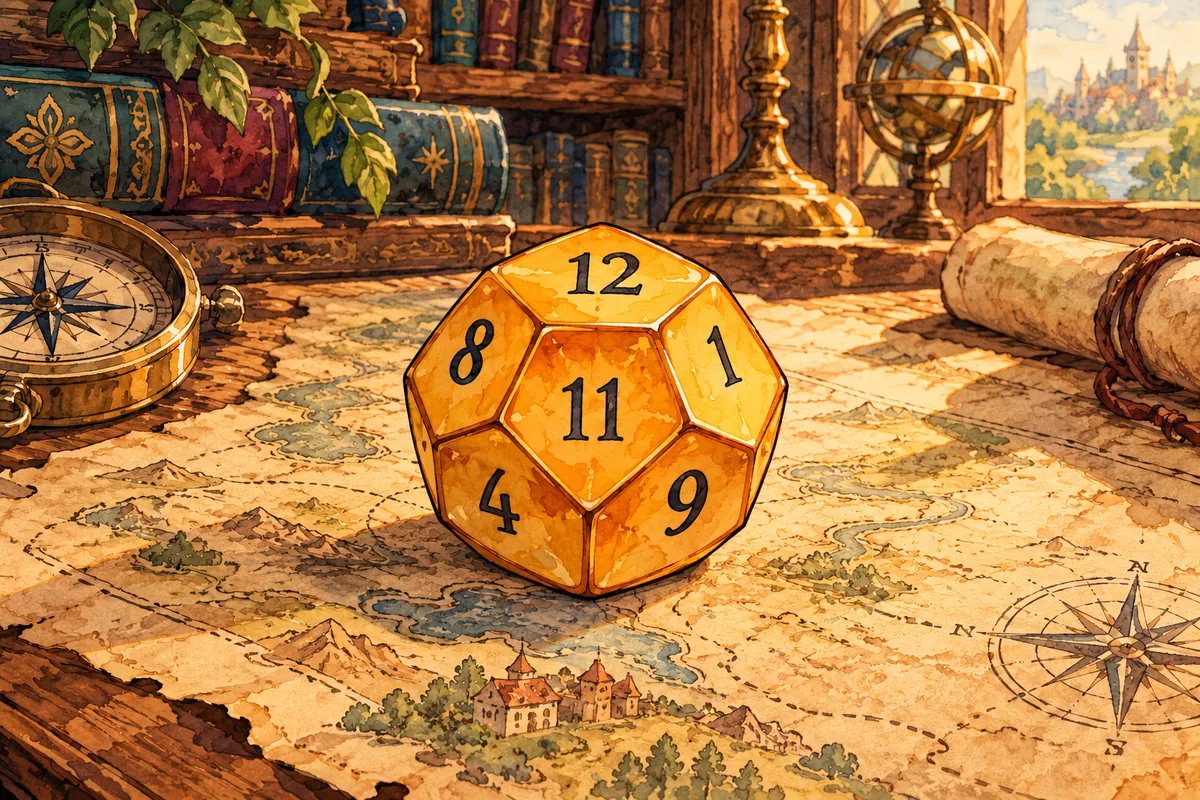
📈 1d12 vs 2d6: Same Maximum, Very Different Randomness
Both can hit 12, but one is flat and the other strongly prefers the middle.
A single D12 and two D6 can both produce a total of 12, but that superficial similarity hides two very different probability shapes.
1d12 is flat
On a fair D12, every face from 1 to 12 has the same probability: 1 out of 12, or about 8.33%. A 2 is exactly as likely as a 7 or a 12.
2d6 forms a hill
With two six-sided dice, totals run from 2 to 12. There are 36 equally likely ordered pairs, but they do not produce totals equally often. There is only one way to make 2, but six ways to make 7.
| Total | Ways | Chance |
|---|---|---|
| 2 or 12 | 1 each | 2.78% each |
| 6 or 8 | 5 each | 13.89% each |
| 7 | 6 | 16.67% |
So which one should a game use?
Use 1d12 when you want every listed outcome to have equal weight. Use 2d6 when you want average results to happen frequently and extreme results to feel special. That single choice changes the texture of a system even before you add modifiers.